Followers

Showing posts with label Health Tips. Show all posts

Tuesday, March 1, 2016

HONEY SWEET PLUM SAUCE FRIED CHICKEN

Chicken meat is one of the fastest cooking ingredient compared to other types of meat like beef, mutton or pork. It can be cooked in many ways, grilled, breaded, deep-fried/pan-fried, roasted, baked and boiled, etc.
Chicken is also a good source of niacin [vitamin B3] - which aids in metabolism; vitamin B6 - important to immune system and blood sugar level maintenance; biotin [vitamin B7] - which helps cell growth; and vitamin B12 - which is involved in nerve cell and red blood cell maintenance. It also contains iron [oxygen transport and cell growth] and zinc [immune system functioning and DNA synthesis].
Having shared this much of information about chicken meat, this is one of the many easy chicken dishes which I prepared with honey sauce.
Joyce has shared some nutritional facts about honey which is high in antioxidants, improve digestion and good for the skin etc.  Looks like this is a nutritious and healthy dish which we can prepare for our family.
 The chicken pieces can be deep fried or pan fried.  If you prefer crispy fried chicken pieces then you can cooked it using deep frying method.  I prefer pan-fried in a non-stick pan/wok as no oil or not much oil is needed to cook them.
Fragrant fried chicken in tasty sweet sauce.  It is appetising enough to go with rice and definitely suitable for the young and teenagers in the family.  Of course, the elders can once in awhile indulge in it, too.
Ingredients
[serves 2-3]
2-3 deboned chicken whole legs with skin
1 big onion - coarsely chopped
1 red chill or 2 chilli padi - chopped
1 tbsp toasted sesame seeds
Garnishing - some chopped spring onions
Marinade for Chicken
1/2 tsp of salt and sesame seed oil
1 egg white
2 tbsp cornflour [can omit if chicken is with skin on]
Sauce Ingredients [combined]
3 tbsp plum sauce
2 tbsp honey
1/2 tbsp sugar
1 tsp sesame seed oil
  1. Chop chicken into bite size pieces or keep whole.  Marinate with seasoning for several hours.
  2. Heat up wok with enough oil for deep frying in medium hot oil until lightly golden and cooked or heat up a non-stick wok without oil, pan fry chicken whole legs [skin side first] until oil oozes out and skin is golden brown. 
  3. Turn over to fry the meat side until cooked and brown.  Dish up.
  4. Using the same wok [remove excess oil], saute onions and chillies until fragrant.  Pour in the combined sauce, bring to boil until bubbly.  Return the fried chicken to the wok, mix well with the sauce.
  5. Dish up and sprinkle sesame seeds and spring onions as garnishing.  Serve hot.
Photobucket


I'm submitting this post to the event Little Thumbs Up [March 2015 Event: Honey] organized by Zoe [Bake for Happy Kids] and Doreen [My Little Favourite DIY] and hosted by Joyce [joycescapade.com]

Thursday, October 8, 2015

BLUE PEA KUIH SAGO

I have made kuih sago with palm sugar and pandan juice using several recipes. Recently, a neighbor told me that she used blue pea flower in kuih sago too. 
Using the similar recipe as the EZ Palm Sugar Abok Abok [Gula Melaka Kuih Sago], I prepared this one with the indigo water obtained from the bunga telang flowers.
Natural coloured kuih.  Looks lovely coated with fresh grated white coconut. Taste yummy, too.  Click here to read more about the benefits of blue pea flowers.
Ingredients
300 gm sago pearls
380 ml water
30 blue pea flowers [bunga telang flowers] or more
150 gm sugar
2 pandan leaves – washed and knotted
200 gm fresh grated white coconut + 1 tsp fine salt [steam 5 minutes and cool]

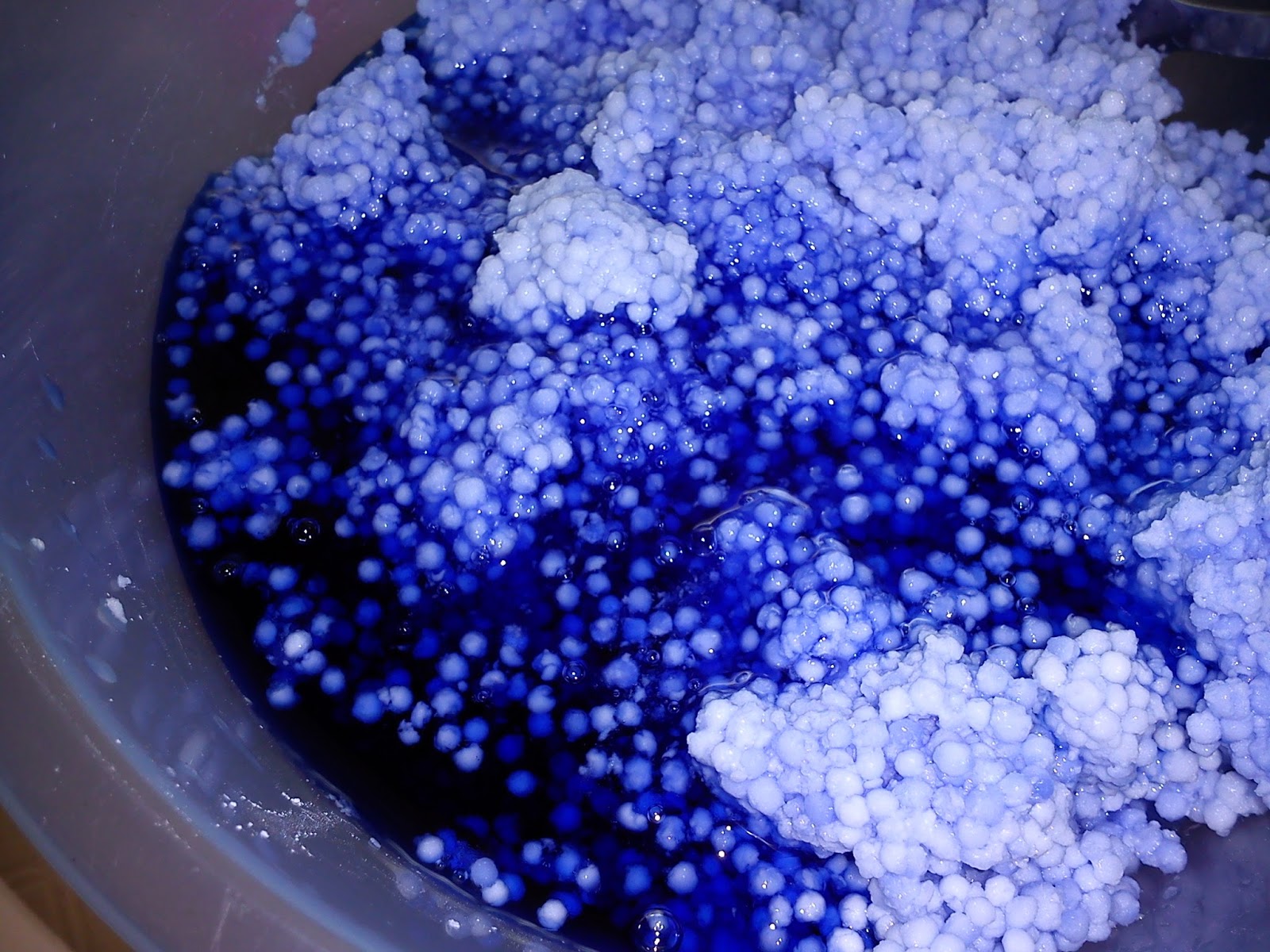
Soak Sago with Indigo Water for 1 hour

Soaked Sago after 1 hour
Mix sago with indigo syrup 
  1. Blend blue pea flowers with water. Strain the juice and discard the residue.
  2. Put sugar, pandan leaves and 80 ml indigo water into a saucepan. Boil until sugar dissolves. Strain and set aside.
  3. Soak sago with remaining indigo water [add water to about 300 ml] for at least an 1 hour. 
  4. Strain away excess water after soaking then stir in the cooled syrup. Mix well.
  5. Pour mixture into a steaming tray [6 inch square tin lined with cling wrap], spread evenly.
  6. Steam over rapid boiling water for 30 minutes or until sago becomes translucent.
  7. Remove to cool thoroughly before cutting in small squares. Coat sago pieces with grated coconut.
    Steamed Blue Pea Kuih Sago
     
    I am submitting this post to
    Little Thumbs Up Event - October 2015 Theme - Coconut organised by Zoe of Bake for Happy Kids and Doreen of My Little Favourite DIY and hosted by Jess of Bakericious

    Little Thumbs Up

Thursday, August 6, 2015

FRAGRANT BLUE PEA FLOWER RICE

This is the first time I tried cooking rice with blue pea flower [Bunga Telang] even though I have seen the recipe long ago. What prompted me to prepare this rice was because a friend confirmed that blue pea flowers do have many health benefits.   The following are the benefits I read from here.

The Benefits of Blue Pea Flowers:
* Strengthens the hair for healthy hair growth
* Prevents skin bruising
* Keeps skin glowing and healthy
* Treats urinary problems
* Improves eyesight and night vision
* Treats eye infections
* Stimulates blood circulation
* Detoxifies the whole body
* Provides antioxidants
* Slows aging process
* Enhances immune system 

Verdict – the rice is fragrant with the cardamons and ginger. A little spicy with the black pepper powder in it.
Recipe adapted from Yum Yum Magazine No. 67
Ingredients
[serves 4]
300 gm rice – washed and drained
10 blue pea flowers [bunga telang] – rinsed
20 gm young ginger – chopped
3 cardamon pods
3 pandan leaves – washed and knotted
1 tsp of salt and black pepper powder
1 tbsp oil
  1. Heat up oil in a non-stick pan, saute chopped ginger, cardamons until aromatic.
  2. Add in rice and remaining ingredients. Fry to mix well.
  3. Transfer the rice mixture into a rice cooker. Add in water, mix well and cook until dry. Fluff up and dish up to serve with other dishes [I steamed rice in steaming tray for 30 minutes].
 photo 77951578-1914-4b72-8eda-9e40a91183ac_zps331eb4b4.jpg
I'm submitting this post to Cook Your Books Event #26 [August 2015] hosted by Joyce of Kitchen Flavours

Monday, July 6, 2015

EZCR #14-CHICKEN WITH CHONG CAO SHEN SOUP

This is a homely soup which my MIL used to cook. She buys the 'fresh cordyceps' [Tang Chang Cao]* from the wet market which is not too costly.  This is the name she got from the vegetable seller.  A hundred grams costs RM1.80 and is enough to cook a soup with 3-4 chicken wings.  It is crunchy after boiling.  We finished eating all of it. *Information received from reader, these are called Chong Cao Shen [虫草参 or 地蚕]  a kind of vegetable root. 
The soup is herbally and very tasty, not too bitter with the dong quai but aromatic. It’s a nice soup which does not require long time to brew. All in a matter of 30 minutes and the soup is ready to devour especially after a hard day’s work.
Notes: Cordyceps sinensis is a caterpillar fungus that grows on a type of caterpillar. These days, this parasite is cultivated using grain. 
Cordyceps is known as an anti-asthmatic and anti-cancer agent which helps smooth muscle relaxation. It is used to stimulate the endocrine system, as an antibacterial agent, and to aid patients suffering from chronic renal failure. 

According to this article, Today, cordyceps is used in China specifically for the treatment of fatigue, cough, impotence, and anemia. It is listed in the Chinese Pharmacopoeia as a treatment for asthma and “impotence and seminal emissions with aching of loins and knees.”
One of the newest on the long list of cordyceps benefits is that of an immune modulator. While certain compounds in cordyceps significantly boost immunity, there are others that appear to modulate the immune system so that the body doesn’t attack healthy tissue. This could be a huge breakthrough in the treatment of autoimmune diseases.  Cordyceps is truly a miracle fungus.

Ingredients

[serve 3-4]
3-4 chicken wings – discard the tip and cut into 2 pieces – blanched in hot water and rinsed
2 dried mushrooms – soaked, rinsed and quartered
4 red dates
3-4 slices of dong quai
100 gm Chong Cao shen [虫草参 or 地蚕] 
 900 ml water

  1. Bring water, mushrooms, roots, red dates and dong quai to boil for 10 minutes until aromatic.
  2. Add in the chicken wings, bring to boil then simmer over low heat for a further 15-20 minutes.
  3. Add salt to taste and a little chicken stock granules if preferred.
  4. Dish up to serve hot with rice.

Thursday, December 18, 2014

EZ Chinese Black Beans Pork Ribs Soup

My mother in-law cooks this kind of soup quite often but usually with pig’s tail which I find it quite oily and avoid drinking it. 
Recently, I read from Kat Juju that black beans aka black turtle beans is an excellent source of protein and fibre. It is also packed with powerful anti-oxidants providing the body with lots of essential vitamins and minerals. 
From TCM [traditional Chinese medicine] point of view, this soup helps to tonify the kidneys, strengthens yin energy and nourish the blood. A must for people who are tired, run down and whose body needs recovery. 
According to Kat, kidneys are the body’s natural filter of the blood and remove waste which is diverted to the urinary bladder. Like all kinds of filters, the kidneys need to be nourished and detoxed to maintain its proper function. 
Traditionally drunk by pregnant and women undergoing confinement, this blood nourishing soup is beneficial for both men and women.
Verdict – Like what Kat Juju says, this is a delicious and so easy to make soup. I tried and she is right even though I slightly modified the recipe for more simplicity. I replaced red dates and kei chee with another specie of red dates called Goji Dates [available at medical shops]. This is a seedless red dates which are sweet and stays in shape even after boiling for a long time. If you can’t find them then use the ordinary red dates and kei chee. The black beans are crunchy soft and the pork ribs are tender. Nice soup which I wouldn’t mind cooking it often. 
Ingredients 
[serves 2-3] 
200 gm pork ribs – cut small pieces 
50 gm black beans [pre-soaked in cold water for several hours, drained] 
9 Goji red dates or 20 red dates and a handful of Goji [kei chee] 
¼ piece of cuttlefish – rinsed well 
A few cloves of garlic 
800 ml water 
Salt to taste 
  1. Blanch pork ribs in boiling water for several minutes to remove the scums. Remove and rinse well with running tap water. 
  2. Place all the ingredients [except salt] in a soup pot. Bring to a rolling boil, scoop up any scums that surfaced. 
  3. Lower heat to simmer soup for about 45 minutes or until black beans and pork ribs are soft and tender. 
  4. Add salt to taste before serving hot. 

Monday, November 24, 2014

Dried Longan Pineapple Soup

I'm back from holiday in Thailand.  Tried so much of their desserts, noodles and soup.  All on the very sweet side to my taste-buds.  This dessert is incomparable at all with Thais sweet desserts.  I cooked this before going on holiday.  Now I appreciate this dessert even more.  Our pineapples are good and cheap cos' I came across a stall in Chiangmai selling one whole cut local small pineapple for 100 bahts.
Chance upon this recipe in Y3K Magazine No. 69.  Looks delicious before I noticed the additional information about its properties.
Before I go on with the recipe, it's better I share the health properties of this dessert first.

Herbal Properties
tranquilizes the mind
improves blood production and pressure
good for insomnia
warming tonic for weak bodies
Dosage: Taken once a day for 1 week on a trial basis
Verdict- very nice dessert served warm or chilled with simple ingredients.
Ingredients
200 gm pineapple flesh - cut and soaked in 200 ml water with a pinch of salt for 10 minutes, then drained
100 gm dried longan flesh - rinsed
100 gm red dates - rinsed and seeded
1500 ml water
3 tbsp brown sugar to taste
  1. Bring water to boil, add in pineapples and red dates to cook for 1/2 an hour.
  2. Add in dried longan and continue to simmer for about 1/2 an hour or until water has reduced to about 1 litre.
  3. Add sugar to taste and serve.


I'm submitting this post to Cook Your Books Event #18 hosted by Joyce of Kitchen Flavours
Cook-Your-Books