Followers

Showing posts with label Nyonya. Show all posts

Thursday, November 2, 2017

NYONYA CHAP CHAI

Ten days of strictly meatless meals for my family.  Gosh!, great achievement and is it possible that we can cut down our meat intake from now on?  Must keep it up, at least 75%, maybe??? All depends on my hubby, if he can we all can.

This is a Nyonya [Peranakan] style mixed vegetables shared by Baba, Kenny Chan.  The recipe was published in Home Cooking Magazine February 2001 Issue.  I had this magazine since then but have not got down to try the recipe.
There are numerous versions of the Nyonya Chap Chai, even myself have tried preparing this dish in different ways at different times.  I have never tried using prawns in this dish.  Again, here I have omitted the prawns in the recipe [250 grams small size prawns] because I want to prepare a meatless dish.  This dish will look a little darker if the taucheong you used is of a darker colour.

Recipe adapted from Home Cooking Magazine February 2001 Issue with modifications
Ingredients
[serves 3-4]
20 dried lily buds – soaked, knotted and remove the hard tips.
2 strips dried beancurd stick [tau kee] – soaked in warm water with a dash of salt for 20 minutes
1 tbsp black fungus [bok nee] – soaked
3 dried mushrooms – soaked and sliced
A few slices of ginger
1 small bundle of glass vermicelli [tunghoon] – soaked for 5-10 minutes, cut 3 inch sections
100 gm cabbage  - break into small pieces
Some slices carrots
2 tbsp oil
1 – 2 tbsp preserved soybean [taucheong] - chopped
1 cup water
Salt, pepper and msg to taste

  1. Heat oil in a non-stick wok, sauté ginger,  mushrooms until fragrant and taucheong.  Fry until aromatic.
  2. Add in cabbage, carrots, black fungus and beancurd stick.  Stir fry for awhile, add in seasoning.
  3. Stir fry to mix well, add in water, bring to boil until cabbage is tender.
  4. Lastly add in tunghoon and dried lilybuds. Tastes to adjust seasoning.  Cook until sauce is slightly reduced.
  5. Dish up to serve, garnish with chopped Chinese celery [kin chye].

Wednesday, April 26, 2017

KELANTAN STYLE HONG BAK

Hong Bak is basically quite similar to Tau Eu Bak [Soy Sauce Pork Belly] but there is some variations to ingredients, seasoning and steps.  Each one recipe for Hong Bak has its’ own unique taste and flavor.  It is just a matter of one’s preference, choice and familiarity of the dish.

Though this recipe is different from my usual family recipe or other chef’s recipes, I like this too.  I love trying various Hong Bak or Tau Eu Bak recipes but I will keep those which I really like the tastes.  This one is more on the sweet side which my hubby commented and he still prefers the one which tastes savoury.  As I said, it is a matter of preference and to me, I like the chewy pork belly pieces which is well braised, the tasty hard-boiled eggs and the thick sauce which is packed with all the flavours of this dish.
The thick sauce was good with plain white rice mixed with sambal belacan and freshly cut cucumber slices.  It is just awesome for a simple meal in the comfort of my home.
If my hubby doesn't like, no problem, I get to enjoy a bigger portion, hehehe!  Anyway, there isn't much left because half of this portion went to my mother in-law who loves braised pork belly with soy sauce.  In fact, it is my hubby who asked that I cooked this for his mum.
Ingredients
600 gm pork belly with skin  – cut bite size pieces
10 hard-boiled eggs – shelled [you can add less]
1 piece cinnamon stick
2 star anise
6 cloves garlic – crushed
90 gm palm sugar [gula Melaka]
450 ml water [150 ml x 3]
½ tbsp oil
Seasoning
2 tsp dark soy sauce for colour
2 tbsp light soy sauce
1 tbsp preserved soy bean paste [taucheong]
1 tbsp oyster sauce
1 tsp pepper
¼ tsp salt

  1. Heat up wok, dry fry cinnamon stick and star anise until aromatic, push aside.
  2. Add in oil, sauté garlic until aromatic, add in palm sugar.  Stir to mix, until sugar dissolves. 
  3. Add in pork belly pieces, stir fry to coat with the caramel and firm up, then add in the seasoning ingredients.
  4. Continue to fry until meat pieces are fragrant and some oil oozes out from the meat.  Add in 150 ml water, bring to boil for 10 minutes.
  5. Pour in another 150 ml water together with hard boiled eggs.  Bring to boil, cover to simmer ingredients for a further 10 minutes. 
  6. Add another 150 ml water, bring to boil again, then braise until meat is tender and sauce is thick.
  7. Dish up to serve with rice and sambal belacan  [Pork dish tastes better after resting. Reheat before serving]. 

Tuesday, March 21, 2017

KUIH BINGKA UBI

Most of the time when I prepare kuihs or cakes using tapioca, I  will buy the ready grated tapioca from the wet market.  But I stopped doing this when the vendor ceased selling it and I gave up making this kind of kuih eventhough, Kuih Bingka Ubi is one of my favourite Nyonya kuih.  I loved the mild bitter taste and unique aroma of tapioca.

I have always thought that grating the tapioca is a very difficult task but I have managed to overcome this negative thought when I took the challenge to bake this kuih.  Now, I am looking forward to try other types of tapioca kuih recipes that I have in hand.
This Kuih Bingka Ubi recipe is a keeper.  It is not difficult at all to grate the tapioca and this kuih is awesome.  Very, very nice though a bit on the sweet side but definitely can be overcome by reducing the sugar a little.

Do take a look at the pictures and you may agree that this kuih is good without tasting.  That's my opinion, hahaha!
Here, I am sharing the original recipe and also the modified recipe.  I have to modify the recipe as I could not obtain the 750 grams grated tapioca from the tapioca I bought [I bought about 820 gm tapioca, should have bought more].  I made up the portion with white grated coconut.  Luckily, the kuih turned out perfect.

Recipe adapted from Yum Yum Magazine No. 95 with modifications
Modified Recipe
650 gm grated tapioca
100 gm grated white coconut
150 ml thick coconut milk
220 gm caster sugar
75 ml melted butter
2 eggs
1/2 tsp salt
1 7-inch square tin, lined and greased at the sides
Original Recipe
750 gm grated tapioca
180 ml thick coconut milk
270 gm caster sugar
75 ml melted butter
2 eggs
1/2 tsp salt
2 loaf tins [18cmx10cmx8cm]

  1. Combine all the ingredients until well mix and sugar dissolves.
  2. Pour into baking container and bake in a preheated oven at 180 degrees C for 45-60 minutes until cooked through [test with a skewer] and top is golden brown.
  3. Remove to cool in the pan before slicing to serve.
Cookbook Countdown
This post is linked to Cookbook Countdown Event #15   hosted by  Joyce and Emily of Kitchen Flavours and Emily's Cooking [Makan2] Forays

Friday, February 3, 2017

CNY 2017 - BEE KOH [SWEET GLUTINOUS RICE PUDDING]

This is the third recipe for Bee Koh which I tried. My first was [here] and my second attempt was the recipe from the book ‘Nyonya Flavours’. The recipe here is from Amy Beh’s first book ‘At Home With Amy Beh’. I have this book for umpteen years but has never tried this recipe until now when I make Bee Koh as a offering item for praying to Jade Emperor God [9th day of Chinese New Year - Pai Thni Kong]. 
My family is Hokkien, so this day is also the Chinese Hokkien’s New Year where Taoists will perform prayers to the Jade Emperor God [Thni Kong] on his birthday.  In the past, my mother and mother in-law will prepare Bee Koh for this occasion but this is already several years ago. These 2 great ladies are getting old [in their 80s] and not so energetic doing the usual chores that they used to do years ago. So it is my turn to prepare it but I'm quite skeptical if mine would be like theirs, so I have to rely on recipes from my collection of recipe books. 
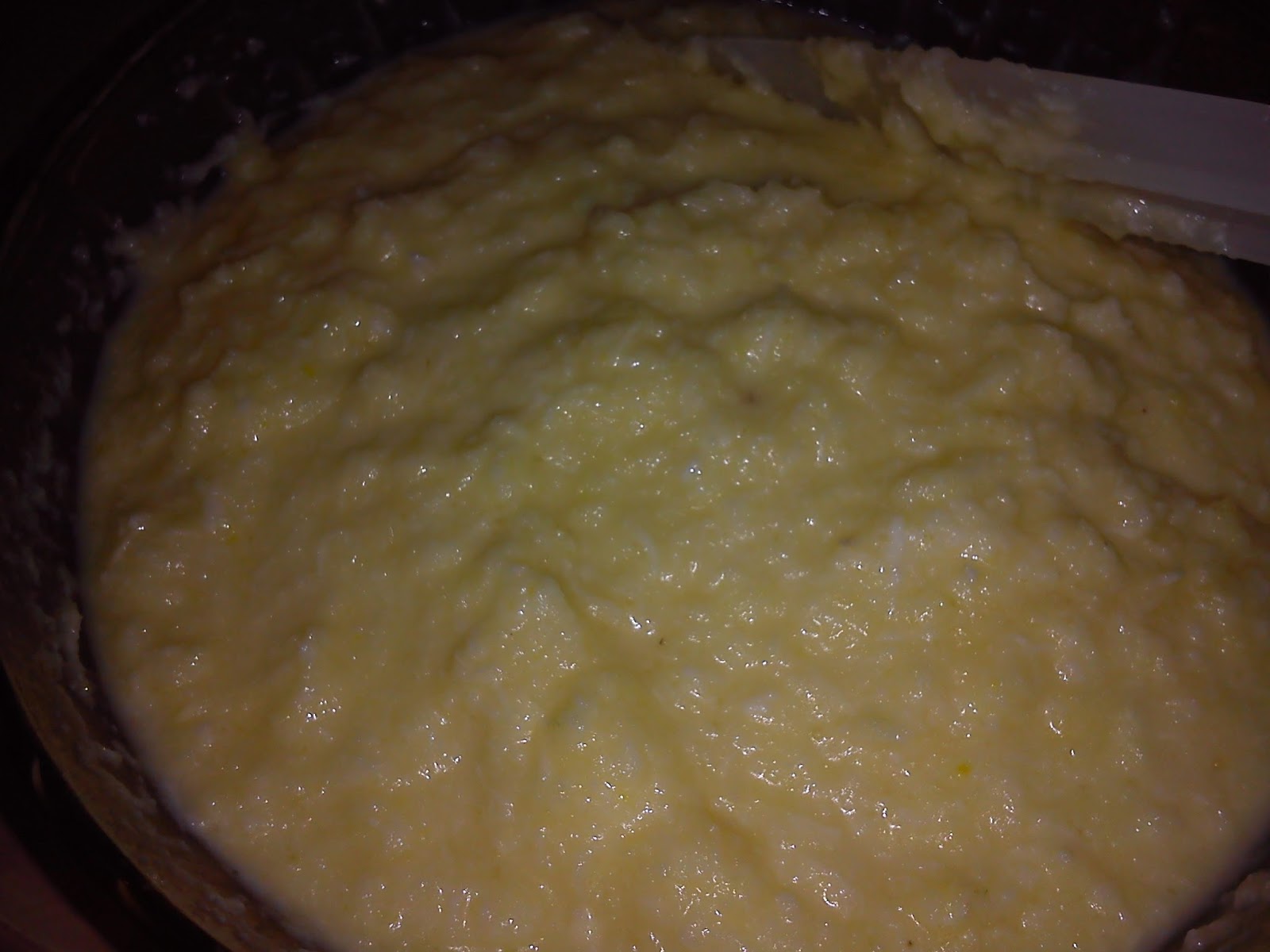
Anyway, I am happy that all the recipes are workable but in my opinion, I prefer this one cos’ the rice is softer, the texture is chewy, sweetness is just nice, very aromatic and I like the shiny look of it.  We finished this kuih very soon with spoonfuls of it instead of slicing cos' it is chewy and soft.
As praying item - traditionally  the kuih needs to be decorated with red dates and dried longans.  
Isn't these cute?
Recipe source from At Home With Amy Beh
Ingredients
425 gm glutinous rice – washed then soaked for 4 hours or overnight, drained
3 pandan leaves – washed and knotted
100 ml water
250-300 gm granulated sugar
225 ml thick coconut milk [from 1 ½ grated coconut]
1 tsp salt
2 pandan leaves – washed and knotted
½ tsp fennel [jintan manis] – I omit
  1. Steam the soaked and drained glutinous rice over boiling water with pandan leaves for 10 minutes. After 10 minutes, sprinkle 50 ml water, toss well and steam for another 10 minutes.
  2. Sprinkle remaining water, toss well and continue to steam for a further 10 minutes or until rice is cooked and soft. Dish out and set aside.
  3. Put sugar, pandan leaves and coconut milk in a non-stick wok. Stir over low heat until sugar dissolves [Do not boil the coconut milk at all]. Strain the mixture if using fennel.
  4. Mix sugar mixture with steamed rice in a clean wok. Stir constantly over medium low heat until Bee Koh is fairly thick, leaves the wok clean and turns into a ball.
  5. Transfer to individual plates or trays lined with cling wrap or banana leaf. Use a banana leaf or cling wrap to level up the surface neatly.
  6. Cool completely before slicing to serve.